What's Really Driving Your Child's Bowel, Bladder or Bedwetting Struggles
It's not JUST constipation.
It's not JUST behavior.
And it's definitely not your fault.
In 5 minutes, let's uncover the root cause pattern(s) behind your child's pelvic floor issues -- and what to do next.
We take a 3 step approach to pediatric pelvic floor:
Find The Why
Help Them Go
Grow Strong at Home
What's Going On Down There?
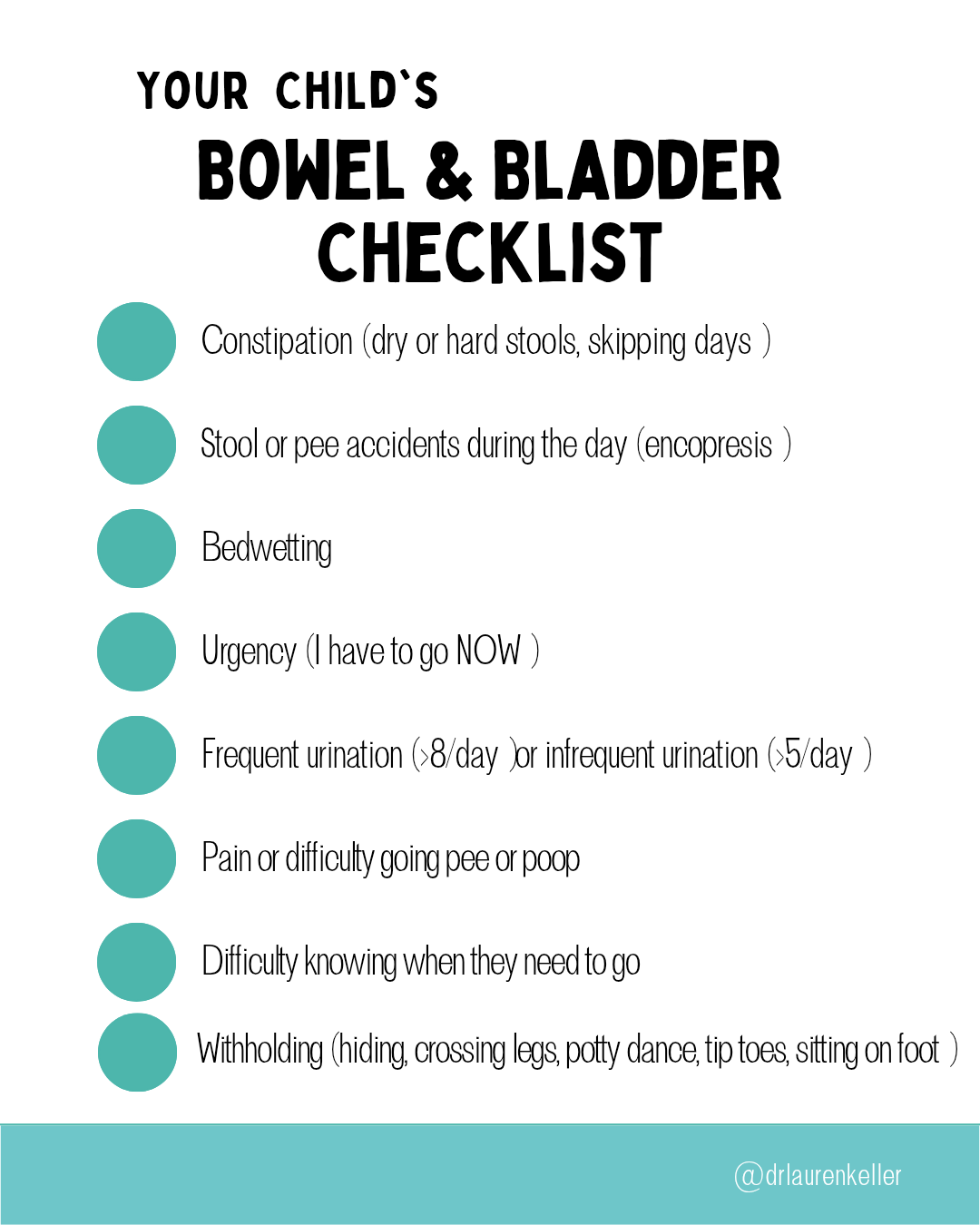
First, let's do a check on your child's pelvic floor. Do a mental check for all that apply:
Constipation (hard stools, skipping days, not feeling like they fully go, dry stools)
Stool accidents or streaks in underwear (encopresis)
Daytime pee accidents
Bedwetting
Urgency (I have to go NOW)
Frequent urination (more than 8x/day) or infrequent urination (less than 5x/day)
Pee that is slow and dribbles or pee that sounds like a firehose
Pain with peeing or pooping
Unable to know when they need to go
Withholding behavior (hiding, crossing legs, dancing, tippy toe walking, sitting with foot in crotch)
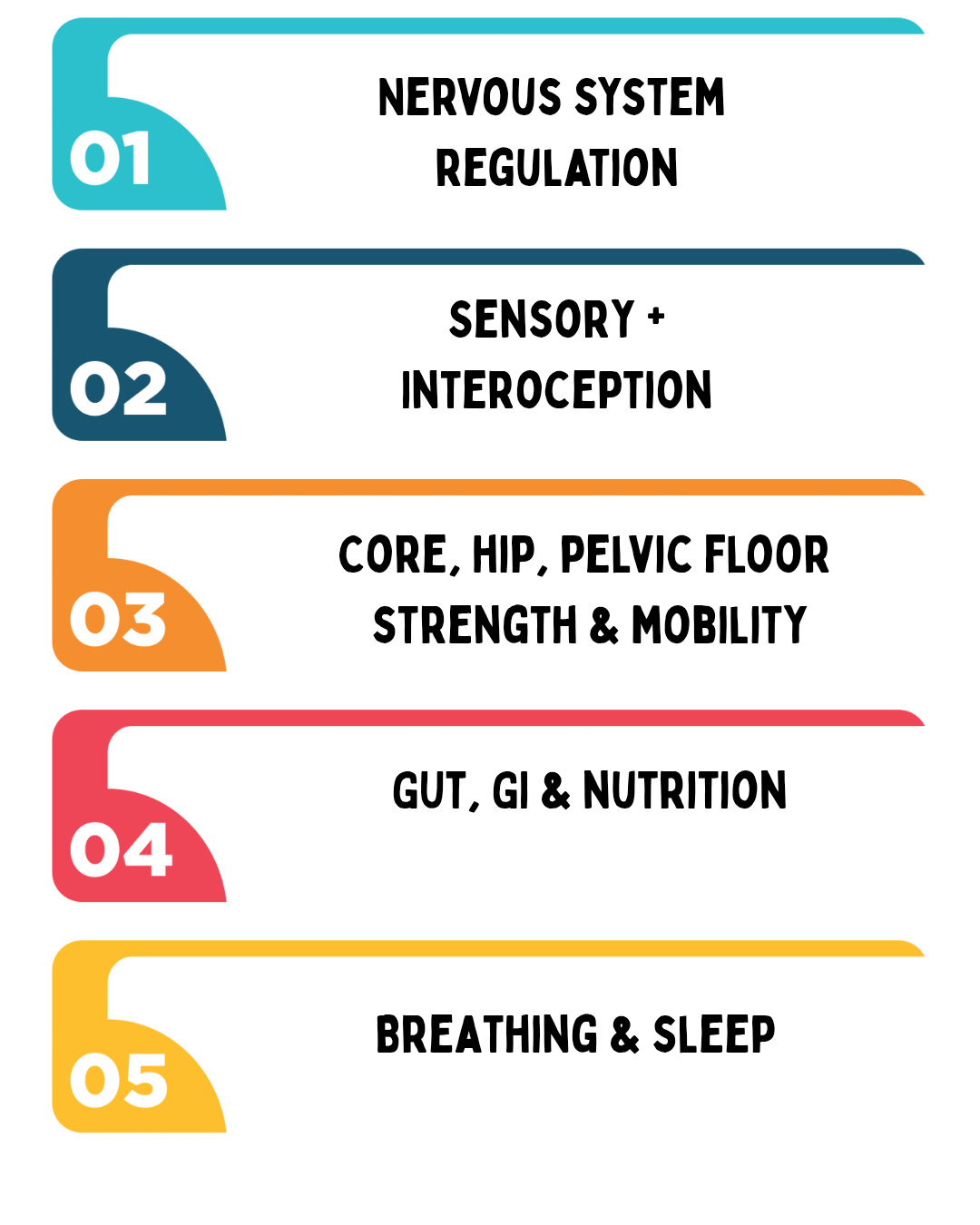
Find the Why: Identifying Your Child's Bowel & Bladder Patterns
Nervous System Regulation
Does your child seem anxious, sensitive or easily overwhelmed?
Does your child avoid the restroom or say they are afraid of the bathroom/toilet?
Does your child have big reactions to seemingly small things?
Do they have trouble winding down or falling asleep?
Sensory + Interoception for Bowel and Bladder
Does your child seem to not notice they need to go or when they are wet?
Do they cover their ears in the bathroom?
Do they avoid sitting on the toilet?
Are they particular about textures, clothing, routines?
Biomechanics and Posture of Pelvic Floor
Do they have a history of toe walking, w-sitting or slouching when sitting?
Did they have any delays in milestones (hated tummy time, rolling to both sides, crawling, sitting, standing, walking)?
Do they stand with a big belly and their butt sticking out or with their butt tucked and a flat back?
Gut, GI, Nutrition
Do they struggle to drink enough water during the day or only drink water at night?
Do they have a history of reflux, colic or digestive issues?
Did they utilize an NG-tube or G-tube for eating as an infant?
Have you noticed they have a bloated bellor or frequent gas (or extra potent gas that clears a room)?
Do they have a limited diet or picky eating or ARFID?
Do they have undigested food in their stool?
Breathing, sleep and Pediatric Pelvic Floor issues
Do they have a history of premature birth, upper respiratory infections, asthma or allergies?
Do they breathe through their mouth during the day or night?
Do they snore, move freqeuently in their sleep, grind their teeth?
Are they difficult to wake in the morning?
Medical History
History of frequent UTIs?
Long-term laxative use?
Family history of thyroid dysfunction or anemia?
Potty training that lasted >6 months?
Help Them Go: Using the Toilet isn't the Finish Line…it's the First Step
A lot of providers focus on one thing: going pee or poop. Unfortunately that's why we have a poop carousel - where kids go poop (yay), then get constipated (boo) and then go again (yay). We go over short-term ways to support your child's bowels, but the real magic happens when a child goes regularly and stays regular.
Grow Strong At Home: Working with the Why to Help them Pee and Poop Long-term
Nervous System Regulation
While you might notice big emotions or accidents, this is a child that needs more nervous system support. When a child is stressed, their pelvic floor struggles to coordinate and can lead to constipation and leaking.
Next steps:
Regulation before expectation (co-regulation and regulation techniques to support bowel and bladder)
Breath and vagal tone work
Safe, predictable routines
Sensory + Interoception
This child may not recognize when they need to go or avoid the toilet entirely. Accidents during play aren't just behavioral but a sign the brain-body-bladder & bowel awareness (interoception) needs more support.
Next steps:
Build body awareness
Practice interoceptive exercises for bowel and bladder
Sensory friendly toileting supports
Biomechanics & Posture
Your child might be constipated despite “doing everything right" or they may look like a monkey hanging off the toilet. This child needs more core, hip and pelvic floor support so their pelvic floor can relax enough to have a bowel movement.
Next steps:
Toilet posture - feet supported by floor or stool, upright posture to help use the breath for bowel movements
Core, pelvic floor and diaphragm integration - use the body to support bowel movements rather than working against them
Support the entire body from toe walking and teeth clenching to turning the middle of the back. The body works as a chain and by supporting all parts of the chain, we can support the pelvic floor.
Gut, GI, Nutrition
Large, painful stools, bloating, and constipation can all affect gut motility affecting stool size, texture and urge
Next steps:
Stool consistency first
Gut-brain axis support
Nutrition and hydration shifts to meet sensory needs
Breathing & Sleep
You might have noticed bedwetting, “deep sleep", mouth breathing or snoring that goes hand-in-hand with their bowel and bladder issues.
Next steps:
Airway screen
Support nasal breathing
Improve sleep quality
From root causes to daily wins -- we help kids feel better, go easier and thrive at home.
Let's help your child go from frustrated and leaking to confident and thriving!
Text 260-415-8357 or email drlauren@drlaurenkeller.com to schedule an appointment for your child.